
The New Alcohol Guidelines: It’s Time to Ditch the "All-or-Nothing" Mindset
For decades, the standard medical advice around alcohol felt pretty comfortable. We were told that moderate drinking—one drink a day for women, two for men—was perfectly fine. Some studies even suggested that a glass of red wine might actually have cardiovascular benefits.
But lately, the conversation has completely shifted.
Recent evidence and updated guidelines are delivering a much starker message: no amount of alcohol is healthy. We are being told that even small amounts can increase our risk of cardiovascular disease and various cancers. To many, the tone of these new warnings feels a bit like a modern-day Prohibition era, demanding absolute abstinence.
Oh boy. Let’s take a deep breath and look at what this actually means for your health, your lifestyle, and how we navigate risk.
Let’s Talk About Risk
Every single day, we make choices that involve risk.
There is a risk of injury or death every time you drive a car.
There is a risk of skin cancer when you step out into the sun.
There is an increased risk of colon cancer when you eat a diet high in red or processed meats
We do not stop driving, and we do not stop going outside. Instead, we manage the risk: we wear seatbelts, and we put on sunscreen.
When it comes to alcohol, the risks are real and well-documented. Consuming alcohol to the point of cognitive impairment (which can happen with fewer drinks as women age) poses immediate safety hazards. Operating machinery or driving a car after drinking carries severe consequences. It carries significant risks to a fetus during pregnancy. These are absolute boundaries.
But for the average adult, completely erasing alcohol from your life isn't the only way to be healthy.
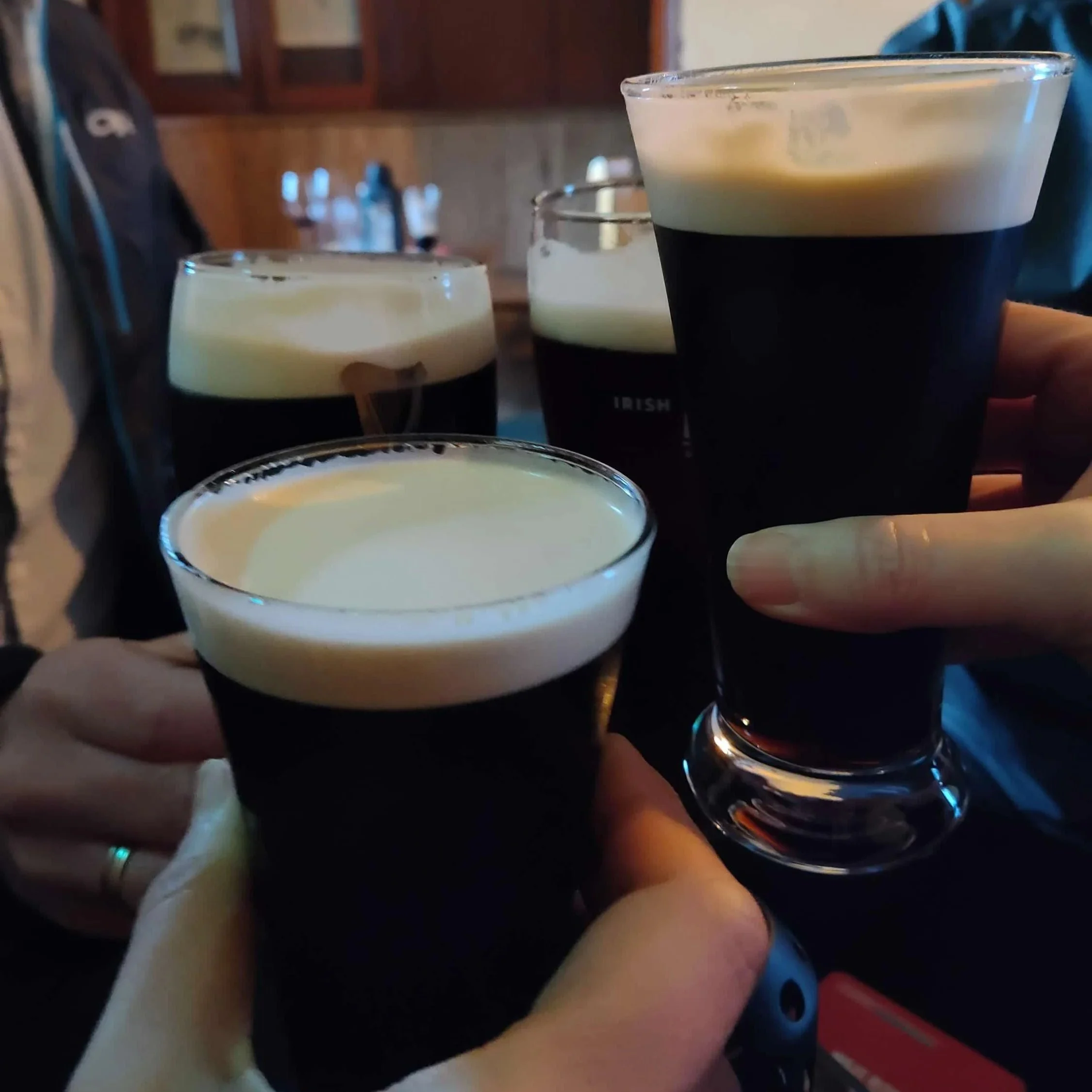
Enjoying a Guinness in Ireland
The Human Side of Having a Drink
Health is about more than just a lab value or a statistical risk profile. It is also about connection, culture, and joy.
Alcohol often weaves its way into our moments of social connection. It’s toasting a newly married couple, celebrating a promotion with colleagues, or gathering for a night out with friends. Sometimes, pouring a specific glass of red wine or a gin and tonic isn't even about the alcohol itself—it’s about the ritual. It marks the end of a demanding workday and signals to your brain that it is finally time to transition into relaxation and home life.
When public health advice focuses entirely on "purity" and enforced abstinence, it ignores the realities of human nature and connection. And for most people, strict rules simply lead to burnout and giving up entirely.
Progress Over Purity
Rather than letting these new guidelines make you feel guilty or overwhelmed, I invite you to focus on meaningful progress rather than unattainable rules.
If you want to evaluate your relationship with alcohol, look at the why and the when. If a drink is simply a tool to mark the end of your workday, could we find a different ritual to achieve that same sense of relaxation? Maybe it's a specialty herbal tea, a mocktail in a fancy glass, a game night with your family, or sitting down to write a letter to an old friend.
And if you want to make a massive impact on your long-term health and cancer risk, remember that reducing alcohol is just one tool in a massive toolbox. You can also make immense, meaningful progress by focusing on adding more fiber and whole foods to your diet, moving your body consistently, and prioritizing sleep.
Your Health is Not an Exam to Pass
My goal as your Family Nurse Practitioner isn't to police your life or hand you a list of strict "don'ts." It is to give you the best evidence available so you can make informed decisions that align with your values and your life.
You don't need to be perfect to be healthy. Let's focus on sustainable, meaningful steps forward—together.
📆 Schedule your complimentary Meet and Greet: to explore the Direct Patient Care model and discover what meaningful progress looks like for your unique life.
🎥 Subscribe to our YouTube channel: for health tips you can apply to your life right now.